Skip to Main Content

Skip to Main Navigation


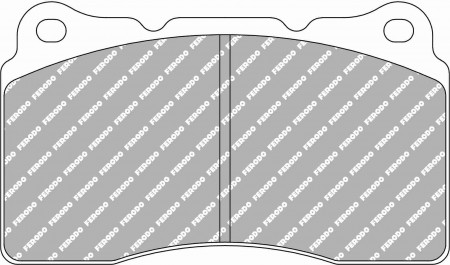
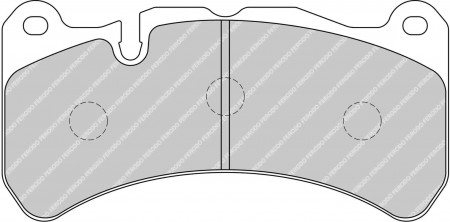
Ferodo DS2500  Brake Pads

Click the image above to zoom in.

Ferodo DS2500 Brake Pads

Retail Price: $252.75
Part #: 11 FCP1334H-N
FMSI #: D1001

Ferodo DS2500 Brake Pads

Buy Now

Add Items to Cart

Product Review Form
Close


(Ferodo compound code H)

The DS2500  is currently the best hybrid track/street pad on the market.   It features the moderately high bite and solid fade resistance of a track pad, with the relatively low dust and noise levels of a street pad.  When used as a street pad, it can produce some squeal on certain vehicle platforms.  During aggressive driving the DS2500 is known for its flat torque curve, which means as temperatures go up, the response through the brake pedal remains consistent.  If you drive aggressively on the street, do some canyon runs, autoX, and maybe some light track duty on street tires, the DS2500 is tough to beat.

When used on fast, heavy cars on the track with race tires, pad wear rates tend to be higher than some of the full track pad compounds.  Under those conditions, Essex would recommend the Ferodo DS3000 or DS1.11. 

ds2500_634

With Ferodo race pads low- and high-speed braking efficiency, reduced stopping distances and consistent brake pedal feel are yours from first time - every time. Available for all leading high-performance European and Japanese vehicles.

The main characteristics of DS2500 are:

  • Consistent coefficient of friction (0,42) at all temperatures
  • Low noise
  • low dusting
  • Long pad life
  • Kind on discs
  • Race pedal fee

This new generation of friction material is very low in compressibility ensuring a firm pedal, whilst still providing great life for both disc and pad. Combined with low wheel dusting and good noise characteristics this product is the brake pad for the driver who demands the ultimate in track day braking performance.

All part numbers in the range feature a suffix. This suffix identifies the material compound available for each part number. Many part numbers are available in more than one material and are therefore listed accordingly in our catalogues with different suffixes as explained below:

H = DS2500

C = 4003

R = DS3000

M = DS3000 Plus 03

E = DS3000 Endurance

W = DS1.11

X = DS2.11


Essex Part #11 FCP1334H-N
Manufacturer Part #FCP1334H
FMSI #D1001
CompositionSemi-metallic
CategoryStreet/Club Sport
Max Operating Temp*1300 F
DustModerate
NoiseLow to Moderate
Bite / MuModerate
Judder/VibrationLow
Pad wearModerate to High (on track)
Rotor wearModerate

Please follow your vehicle service manual for installation instructions, or have the work performed by a qualified technician.

Ferodo's recommended bedding procedure:

During manufacturing, all Ferodo racing products are subject to “chemical bedding” to stabilise the materials and resins used in construction of the pad. Although this “prebedding” is an effective method and sufficient for low temperature use, the ultimate results are achieved by actual bedding on either the car or dyno...

How ? ...

This subjects the pad to the correct heat and torque loads seen in race conditions. These methods transfer pad material into the face of the rotor leaving a “transfer film” the friction generated between the pad face and this transfer film determines the performance of the “bite”. Correct bedding also ensures that materials which may become compressible are stabilized with the heat and pressure to avoid a “spongy pedal”.

Why? ...

When bedding in the car always try to bed on used rotors. If bedding on new rotors follow the rotor bedding instructions of the manufacturer, as it is important to heat cycle them first before bedding the pads. After fitting the new pads prepare the car by blocking off 50 percent of the brake cooling / air ducts to speed the “heat up time”. When leaving the pit lane apply brake gently at low speed to ensure pads are fitted correctly, build up temperature progressively to approx 350° C (670° F). This enables the heat to distribute around all areas of the pad.

When brakes are at suitable temperature begin bedding process, achieve approximately 70 percent of race speed then perform 25-30 brake applications at half normal race pedal pressure holding on for 4 seconds. When this is completed use a slowing down lap to allow brakes to cool. Return to the pit lane and allow pads to cool completely, check rotor appearance. Transfer film should be constant around rotor face, any “patchy” deposit will result in brake pedal judder. The use of temperature paint on rotors enables more accurate bedding procedures.

 ProductSimilarSimilarSimilar
 Add To CartView DetailsOut of stockView Details
Product NameFerodo DS2500 Brake PadsCL RC5+ Brake PadsAP Racing C200 Brake PadsHawk Blue 9012 Brake Pads
Price$252.75$283.64$281.64$254.83
Essex Part #11 FCP1334H-N07 4066 16.0 RC5+03 CP1001T16.0 C20004 453 .585E
Manufacturer Part #FCP1334H4066 16.0 RC5+HB453E.585
FMSI #D1001D1001D1001D1001
CompoundDS2500RC5+S100 Street SportBlue 9012
CompositionSemi-metallicSinteredSemi-metallicSemi-metallic
CategoryStreet/Club SportClub Sport/Full RaceStreetClub Sport
Max Operation Temp1300 F1800F750F1000F
DustModerateModerateLowVery High
NoiseLow to ModerateLow to ModerateVery LowHigh
Bite/MuModerateModerate to HighLow to ModerateModerate to High
Judder/VibrationLowVery LowLowVery Low
Pad WearModerate to High (on track)LowModerateModerate

There are currently no reviews for this compound.

Learning Center

learning center

Know Brakes 1: How to Bed-in Brake Pads and Rotors

Know Brakes. with Jeff Ritter Episode I: Preparing Brake Pads and Rotors

Properly bedding in your brake pads and rotors is absolutely critical if you want to squeeze the most performance from your brake system. Unfortunately, many enthusiasts don’t understand how or why they should be doing this important procedure. In this inaugural episode of “Know Brakes,” Jeff Ritter teaches you everything you need to know to prepare your brake pads and rotors for heavy use. Highlights include in-car footage of the process, before and after component photos, and an interview with AP Racing engineer Steve Hood. Armed with the knowledge in this video, you’ll be able to get...