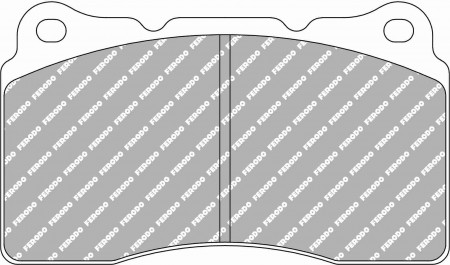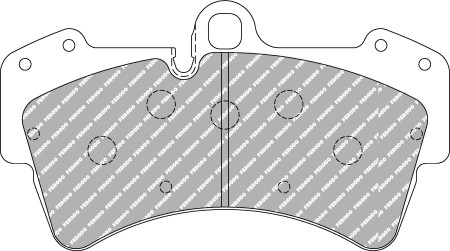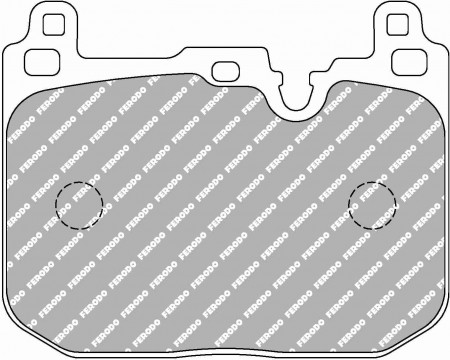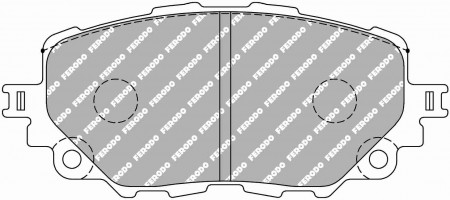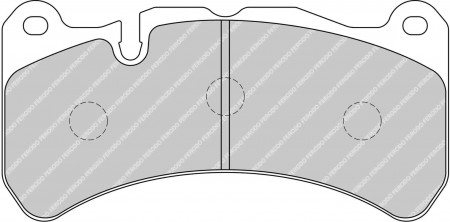
The Most User-Friendly Brake Pads Ever Developed
For the elite professional, brake pad choice is based on experience and feel. A flat torque curve, immediate release, and low compressibility are often must-have attributes. For those of us who aren't as well funded or experienced, pad choice usually comes down to a few more fundamental issues.
Most importantly, you want your car to work reliably at the track with no hassles. When you spend $500 for a weekend motorsport event, you don't want to waste time in the pits chasing brake problems. The most relevant brake pad concerns for the typical enthusiast include:
"Will they fade after hammering them for a 20+ minute session?"
"Will they cause distracting judders or vibrations?"
"Will they burn up so fast that I'll have to buy another set for my next event?"
Unfortunately, most manufacturers dance around these issues and focus on the mundane nuances of their product. Shaving three feet from your stopping distance might be extremely important on the last lap of a sprint race, but most of us are more concerned about not chasing vibrations or having to perform intricate bed-in rituals all day. Fun at the track comes from the time spent behind the wheel, not lying under the car wrenching.
It's from this perspective that the CL Brakes Sintered Brake Pad line was developed. Our objective is to provide the most user-friendly brake pads available. Wouldn't it be nice if you didn't have to worry about bed-in, vibrations, gobs of corrosive brake dust, and extreme pad and rotor wear rates? That's exactly what you can do week after week with CL Brakes' new Sintered Racing Pads.
What existing problems do CL Brakes Sintered Pads solve?
|
Feature |
Benefits |
|
Sintered material has higher coefficient of friction/Mu when hot or cold vs. competing semi-metallic, organic, or ceramic compounds |
Needs no warm-up to provide near maximal bite and performance on first AutoX run or timed hot lap |
|
|
|
|
Minimal bedding |
Very little preparation to achieve maximum performance: only a few moderate stops after install to seat the pads on the rotors |
|
|
|
|
Much less pad transfer to rotor than other pad types |
No vibrations, judder, or damaged rotors. Thin graphite transfer layer is consistent, repeatable, and self-cleaning |
|
|
|
|
Even the mildest sintered compound in the range is fade resistant to over 1200+F |
Almost impossible to fade on a typical track day car |
|
|
|
|
High metal content is extremely wear resistant |
Not uncommon to get 2 to 3 times more laps vs. other pad materials and types |
|
|
|
|
Sintered material is semi-porous |
Can be used offroad and in any weather condition with an added margin of safety: snow, rain, extreme cold and heat |
|
|
Pores retain abrasive particles for superior wear rates |
|
|
Reduces the need for expensive slotted or drilled rotors to generate pad bite |
|
|
|
|
Pad material brazed to backing plate at 1800F |
Prevents separation of pad material from backing plate |
|
|
|
|
Greater density than other pad types, making it less compressible |
Firmer pedal feel, easier to modulate |
|
|
|
|
Extensively track tested on all of the most popular enthusiast platforms including: Evo, STI, Mustang, S2000, Corvette, GT-R, 911, M3, etc. |
Specifically developed for your car and the way you use it |
Dodge Viper punishing some CL RC8's at the 2009 VLN Endurance Racing Championship on the Nordschleife